Table of Contents
What you wear to an interview affects how you’re perceived. You’re not being judged on fashion, though. Interview attire shows your professionalism and your understanding of the work environment’s culture.
Neutral outfits are usually best — nothing too distracting. If you remember one rule from this article, let it be this:
Dress slightly more polished than the company’s everyday norm.
If you follow that rule of thumb, you’ll likely be dressed just fine for the interview.
The Core Rule: Slightly More Polished Than Usual
Before choosing an outfit, research the company’s culture to get an idea of the unspoken dress code.
Look at:
- The company’s website
- Team photos
- The company’s social media
Depending on what you see most of the team members wearing in company photos, you can choose your outfit accordingly.
If it looks business casual, elevate slightly above that.
If it looks relaxed (tech startup or creative field), still aim for business casual. You can always dress down after you get the job.
What to Wear to an Interview (By Setting)
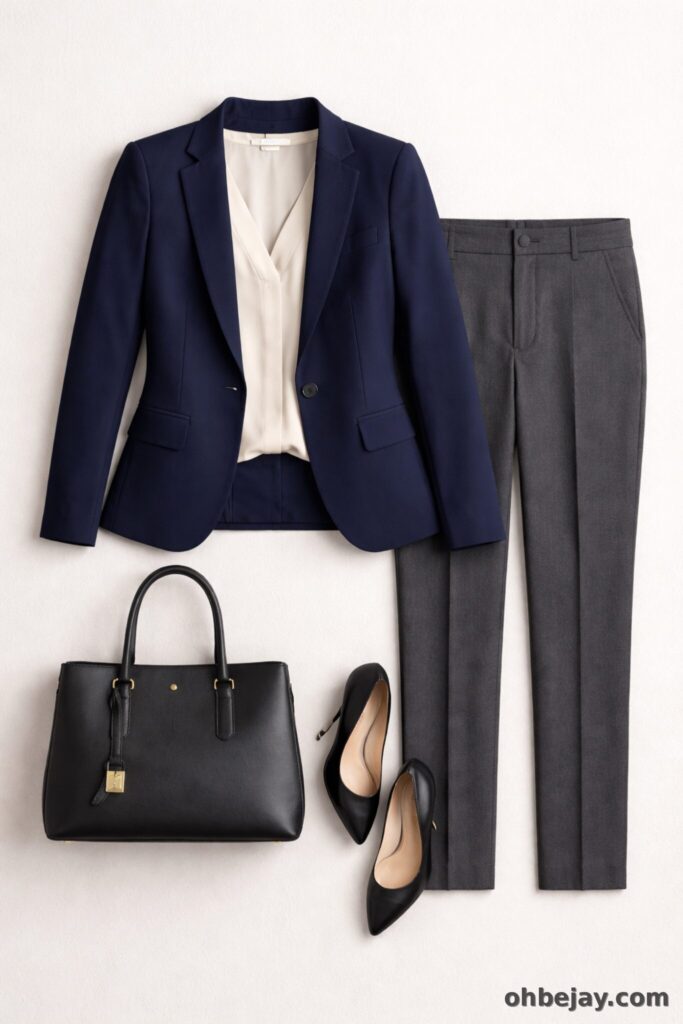
Corporate, Finance, Law, or Government
This is where traditional business attire still applies.
- Structured blazer or suit
- Dress shirt or blouse
- Tailored trousers or skirt
- Closed-toe shoes
- Neutral colors (navy, black, gray, cream)
In these environments, underdressing carries more risk than overdressing.
Tech Startup or Business Casual Environments
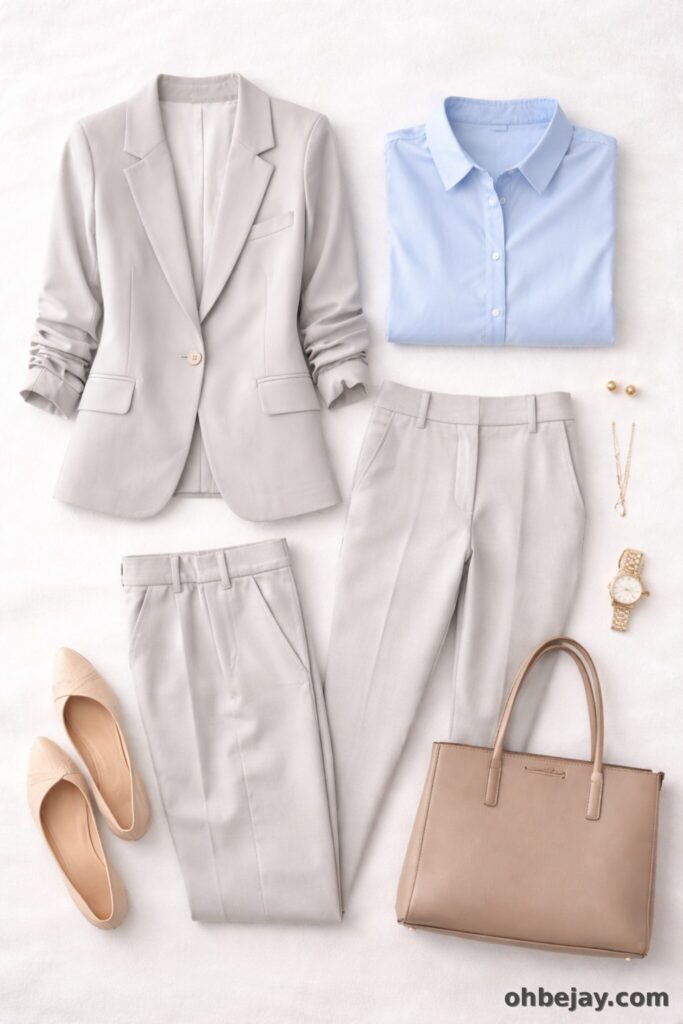
This is where nuance matters. Even if people aren’t dressed in business attire, it’s still important to be polished.
Good options:
- A collared shirt
- Blazer over a clean blouse or button-down
- Clean shoes (if in person)
- Simple jewelry or accessories
These options look intentional, but not too rigid.
Creative Roles
Creative industries often allow for more personality in how people dress at work.
You can incorporate:
- Brighter colors
- Interesting textures
- Modern silhouettes
But avoid:
- Distracting prints
- Anything that pulls attention away from the conversation
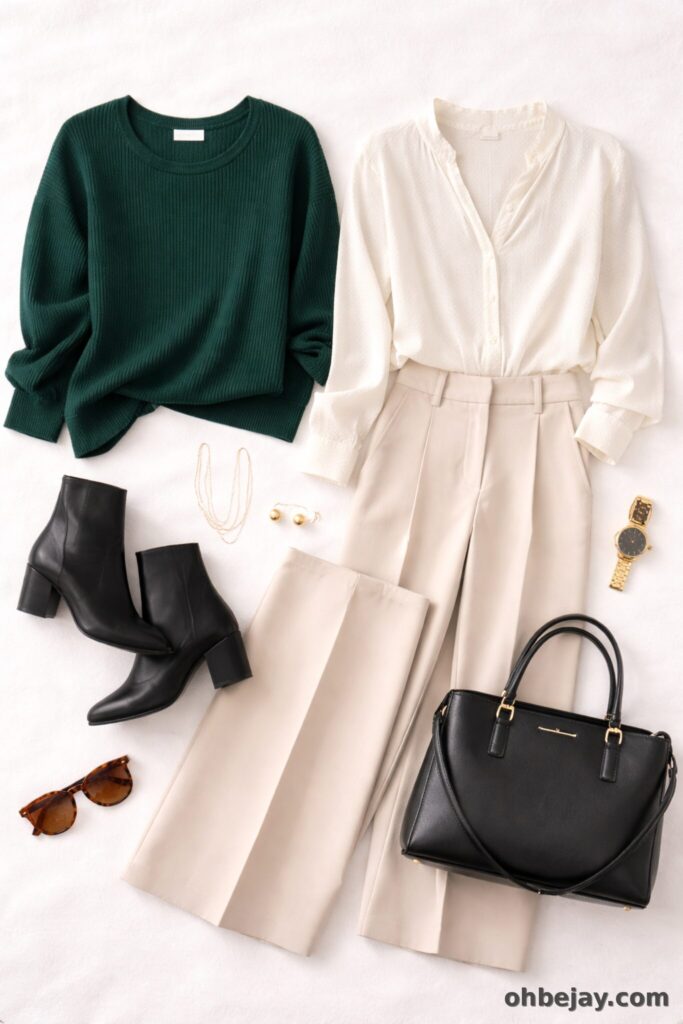
Remote / Video Interviews
For virtual interviews, what’s visible matters most.
Focus on:
- Nicer-than-casual tops
- Solid colors
- Good lighting
- Neat grooming
Avoid:
- Busy patterns that distort on camera
- Wrinkled fabrics
- Hoodies (even if the company is casual)
Even on Zoom, you want to look prepared and polished.
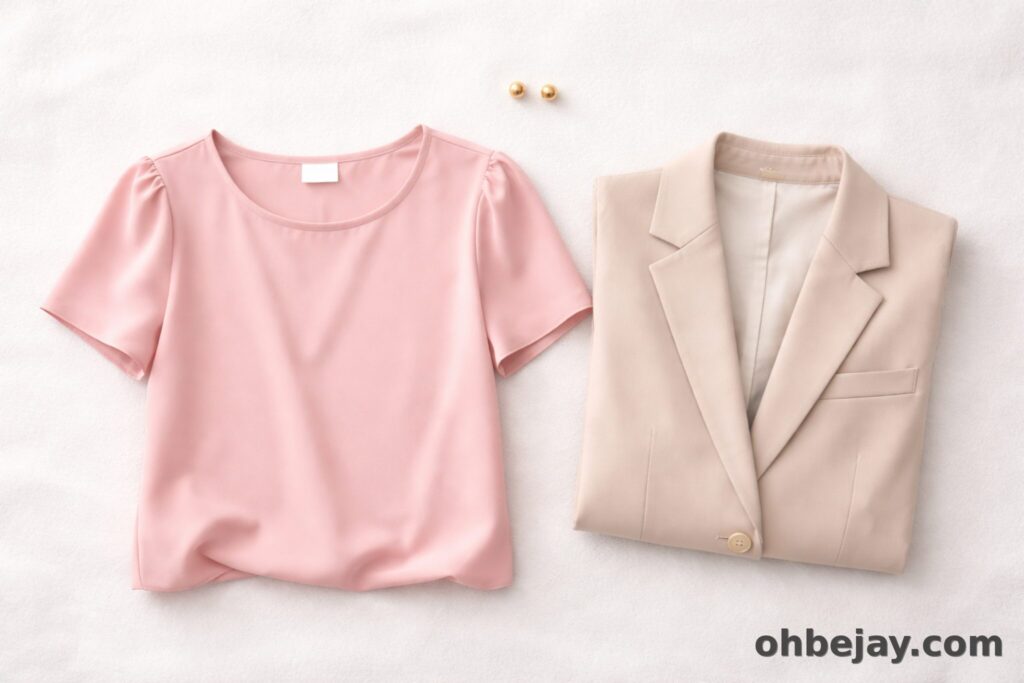
Interview Outfits for Women
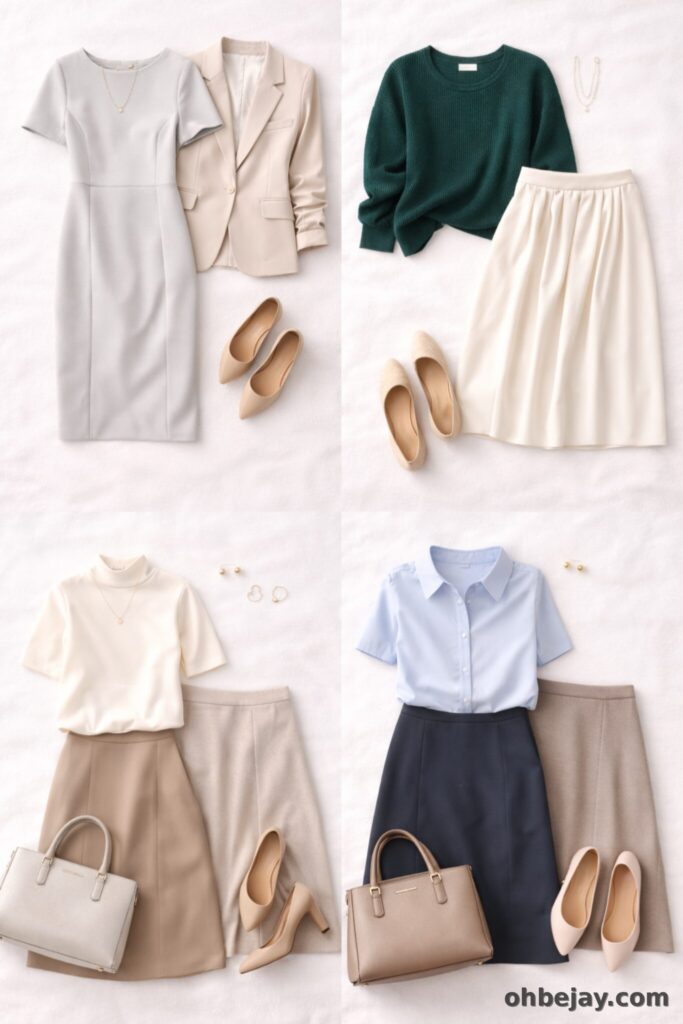
If you prefer dresses and skirts, here are safe, polished options:
- Structured sheath dress + blazer
- Midi skirt + refined top
- Neutral-color turtleneck shirt + A-line skirt
- Blouse + A-line skirt
- Neutral heels or flats
- Minimal jewelry
This is a good combo when wearing pants: Blazer + Blouse + Tailored trousers or Slacks.
Avoid overly tight or overly flowing pieces. Structured clothes signals more professionalism.
Hair and makeup should feel like you — just slightly more polished than everyday. If you’re unsure, lean classic over trendy.
Interview Outfits for Men
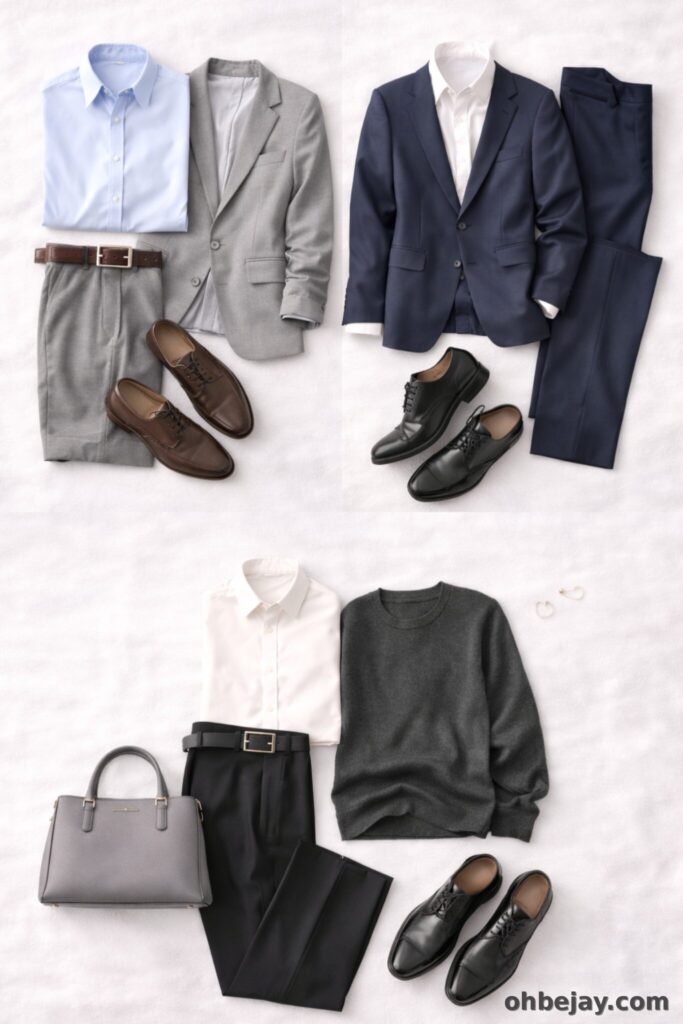
If you prefer slacks or suits, consider:
- Button-down shirt (pressed)
- Blazer or full suit (depending on the industry)
- Merino sweater + dark, clean trousers
- Clean, polished shoes
- Coordinated belt and shoes
Avoid wrinkled shirts or worn shoes. Small details matter more than people realize.
Can You Wear Jeans to an Interview?
Sometimes. But it’s rarely your safest choice.
Jeans might be acceptable if:
- The company is clearly casual
- The role is in tech or creative industries
- The jeans are dark wash
- They are not distressed, ripped, or faded
- They are paired with a structured top (like a blouse or blazer)
If you’re unsure, skip the jeans. It’s easier to slightly overdress than to recover from looking too casual.
Can You Wear Shorts to an Interview?
In most professional settings, no. Even in warm climates or relaxed environments, shorts for a first interview are rarely appropriate.
There are exceptions in highly casual or creative roles — but if you’re asking the question, it’s probably not the right move.
What Not to Wear to an Interview
Here are some common mistakes to avoid when dressing for an interview:
- Wrinkled clothing
- Overly loud prints
- Heavy fragrance
- Distracting accessories
- Ill-fitting clothes
- Shoes you can’t walk confidently in
- Anything you’ll need to adjust constantly
If you’re tugging at your sleeve or constantly adjusting your jewelry during the interview, that’s energy pulled away from your answers. Physical comfort supports confidence.
Final Reminder
Interview attire is not about being overly impressive. You don’t need designer brands or a whole new wardrobe. A good interview outfit is:
- Clean
- Structured
- Slightly elevated
- Appropriate for the setting
Once your outfit fades into the background, your answers takes center stage. And that’s exactly where it should be. Want more help preparing for your next interview? We’ve got you covered. Check out our free and paid interview resources to help you land that offer.